
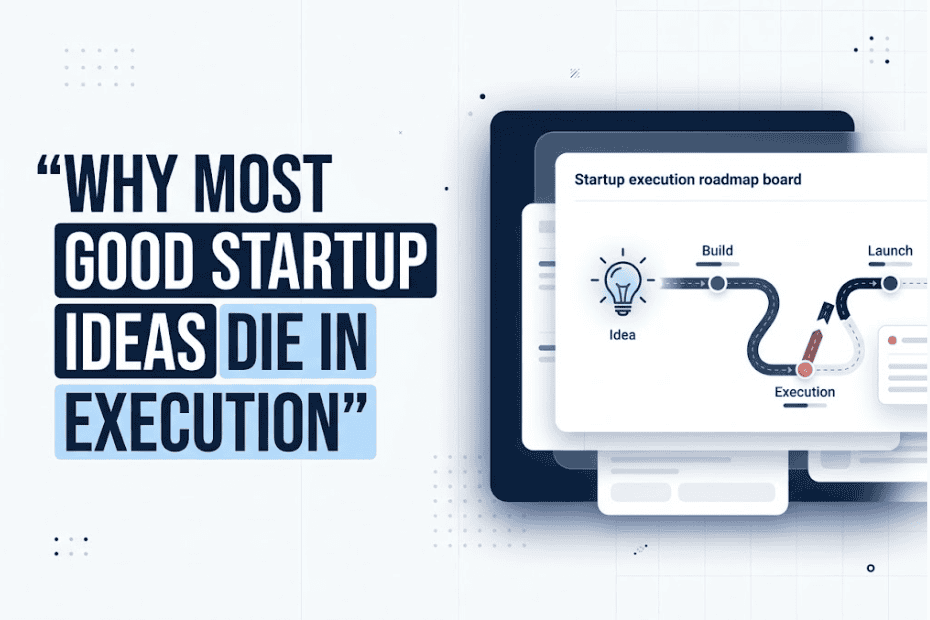
A strong idea often reassures founders, especially when early feedback is encouraging, and investor conversations sound positive. Yet, the distance between a promising concept and a functioning business is filled with silent risks that rarely get discussed openly. Many teams sense something slipping during growth but struggle to name it clearly, which is why understanding why good startup ideas fail in execution becomes an essential conversation for any founder aiming to build something durable rather than hopeful.
How Execution Differs From Planning
A robust plan can outline market fit and customer needs beautifully, yet capturing that vision in real operations requires skills and processes that most teams only discover under stress. Many teams believe that if they can design a competitive product and attract initial investment, everything else will fall into place naturally. This assumption overlooks fundamental startup execution problems where daily operational choices and team dynamics shape outcomes more than any initial concept.
When execution is inconsistent, even well-designed solutions fail to reach customers effectively. Research shows that deep execution issues often cause startups to collapse long before external factors put pressure on growth, because teams struggle with delivery cycles, quality standards, and continuous learning. (source)
These issues rarely appear dramatic at first, but they compound quietly through missed deadlines and inconsistent results. Over time, unresolved execution friction becomes one of the most overlooked startup failure reasons, even when the underlying idea remains viable.
Ownership Gaps Inside Founding Teams
A clear definition of roles and responsibilities is indispensable for execution quality, yet many founding teams delay this until pressure mounts. When people assume others will take charge, confusion replaces clarity, and progress becomes fractured. Internal misalignment on who owns which outcome often leads to duplicated effort and stalled progress, because accountability remains vague.
These ownership blind spots are common founder mistakes that weaken execution long before they appear on financial reports. Industry analysis highlights team-related issues as a frequent contributor to startup failure, with unclear roles and missing skills creating persistent blocks to momentum. (source)
Why Do Execution Problems Compound Over Time?
Slow or ineffective feedback loops prevent teams from learning quickly and course-correcting while costs remain low, which deepens execution gaps and leads to persistent deviations from intended outcomes. In early-stage businesses, teams that fail to gather and act swiftly on customer and performance signals risk building products that miss the mark or fall out of sync with demand.
When feedback is delayed or misunderstood, teams can spend weeks or months reinforcing the wrong assumptions, only discovering the misalignment when it is far more costly to adjust. This pattern explains many execution problems in startups that stall despite early promise.
Misaligned Priorities Across Teams
As startups grow beyond the founding group, alignment becomes harder to maintain without deliberate structure. Product, sales, and operations may all chase valid goals, yet progress slows when those goals compete rather than reinforce one another.
Misalignment increases rework and creates frustration that is often misdiagnosed as a talent issue, while the real challenge lies in execution coherence. These missteps are common startup execution problems that quietly erode performance until teams begin questioning the idea itself rather than the operating model behind it.
Lack Of Operational Discipline
Operational discipline rarely excites founders, yet it anchors reliable execution. Without defined processes, reporting rhythms, and performance benchmarks, teams rely on intuition rather than evidence to guide action. This absence of structure deepens execution gaps, particularly as teams grow and informal ways of working begin to fail, reinforcing why systematic frameworks matter for scaling effectively.
According to open commentary on startup operations strategy, establishing structured processes and key performance tracking provides a clear framework for accountability and consistency, helping teams execute plans reliably as complexity increases. (source)
Fixing Execution Issues Before It Is Too Late
Addressing execution breakdowns early creates space for learning and consistency without disrupting momentum. Teams that actively work on how startups fix execution gaps tend to stabilise delivery, improve trust internally, and regain confidence in decision-making.
For some founders, external operational support becomes valuable once internal capacity is stretched, which explains the growing interest in venture studio UK execution models that embed execution capability alongside strategy. A well-structured startup studio in the UK operational support approach focuses on systems, cadence, and ownership rather than ideas alone, allowing founders to concentrate on leadership while execution stays grounded.
What Changes When Execution Improves
When execution discipline is introduced thoughtfully, clarity replaces confusion, and priorities become easier to communicate across teams. Decision-making speeds up because ownership is visible, and performance becomes measurable rather than subjective.
Reliability improves as teams learn faster from real outcomes, reducing the emotional toll that constant firefighting creates. Over time, execution quality becomes a competitive advantage that protects the original idea from being undermined by preventable friction.
Execution Focused Insights That Matter
- Clear Ownership Structures– Defined responsibility removes ambiguity and accelerates delivery without reducing flexibility. Teams move faster when decisions have a visible owner, and progress can be evaluated objectively.
- Operational Cadence– Regular planning and review cycles stabilise execution quality under pressure. This rhythm allows early detection of risks before they escalate into larger failures.
- Feedback Translation Discipline– Collecting insights is ineffective unless actions follow quickly. Teams that convert feedback into operational change avoid the slow erosion typical of execution drift.
- Aligned Metrics Across Teams– Shared success measures reduce internal friction and focus effort. Alignment ensures that progress in one area does not undermine another.
FAQs
- Why Do Strong Startup Ideas Fail During Execution?
Strong ideas fail because execution exposes structural weaknesses such as unclear ownership, slow learning loops, and inconsistent operational discipline. These challenges often outweigh the strength of the original concept when left unaddressed.
- What Execution Gaps Hurt Startups The Most?
The most damaging gaps involve accountability, prioritisation, and feedback timing. Each gap weakens execution reliability and compounds risk during growth phases.
- How Does Misalignment Slow Progress?
Misalignment causes teams to optimise locally rather than collectively. This leads to duplicated effort, conflicting decisions, and slower overall delivery.
- Can Execution Issues Be Fixed Early?
Early intervention is possible when teams recognise execution as a capability rather than a byproduct. External perspectives, including partners like Toolagen, often help founders regain structure before issues deepen.
- How Can A Startup Studio UK Improve Execution Discipline?
A studio environment provides embedded operational frameworks, shared expertise, and execution oversight. This approach helps founders focus on leadership while maintaining delivery consistency, which Toolagen frequently highlights in execution focused engagements.
Bottom Line
Execution rarely fails loudly, but its quiet signals deserve attention before momentum fades. Founders who treat execution as a core capability rather than an afterthought build resilience alongside growth. If execution discipline feels harder to maintain than expected, exploring structured operational support through partners like Toolagen can provide clarity without distraction.